
A few years ago, a warehouse owner in Gujarat called us after a monsoon storm had caused a fire in his facility. A lightning arrester was never installed, and when lightning struck the building directly, it travelled through the electrical wiring and took out an entire section of the storage area. When we asked him why there was no protection in place, his answer was simple: “I thought it was too expensive.”
And this wouldn’t have happened if he had known that the lightning arrestor price costs a fraction of what he had lost that day.
Lightning arrester price is one of the most searched topics during pre-monsoon months in India, and yet most buyers have very little clarity on what they are actually paying for, what type they need, and why prices vary so dramatically across suppliers.
What Is a Lightning Arrester and Why Does a Building Need One?
A lightning arrestor, known as a lightning rod, is the first line of defence in a lightning protection system. It is installed at the highest point and intercepts lightning before it hits a building. Once it intercepts successfully, it safely carries the current into the ground through earthing systems.
What happens when these systems are not installed? The lightning finds its own path. And this path is usually through your structure, your electrical wiring, or, in a worst-case scenario, a human.
As per the IEC 62305, a complete lightning protection system consists of 3 components working together: the air terminal on top, the down conductor running along the building, and the earthing system below. All three of them need to be correctly designed and installed for the system to work.
Types of Lightning Arresters
Before looking at the prices, it is important to look at the type of lightning protection systems. And in India, there are 2 different types of lightning protection systems available.
1. Conventional Franklin Rod System (IEC 62305)
A network of air terminals, bonding conductors, and down conductors is installed across the building, creating a Faraday cage-like setup that intercepts lightning at multiple points.
E-Link’s conventional lightning arrester system is built as per IEC 62305 and IEC/IS 62561 standards. The air terminals are made from copper-bonded low-carbon steel, available in single spike and multi spike options, and also available in SS304 for corrosive environments. An aluminium lightning protection system variant is available as well.
For most residential buildings, small commercial establishments, and standard industrial structures, a conventional Franklin system is the appropriate and cost-effective choice.
2. ESE Type Lightning Arrester (NFC 17-102)
ESE stands for Early Streamer Emission. This is an advanced technology that works differently from conventional systems. Instead of waiting for lightning to strike and then intercepting it, an ESE terminal actively emits an upward leader that intercepts the lightning strike at a much earlier stage.
E-Link’s ESE product complies with NFC 17-102 norms, carries a ΔT test certification of 60 microseconds, delivers 100% efficiency in discharging lightning current, and is made entirely from SS 304L- making it suitable for all environments, including coastal, industrial, and high-humidity zones. It requires no battery and no external power supply.
What Factors Affect Lightning Arrester Price in India?
By far, you must have an idea about the type of lightning arrestor. Now let’s discuss what affects its pricing.
Area of protection required
For conventional systems, the number of air terminals, the length of down conductors, and the complexity of the conductor network all scale with the size of the structure. A single-storey home needs far fewer components than a four-storey commercial building.
For ESE systems, the protection radius determines which model is needed. A larger radius of protection means a higher-specification terminal, which affects cost.
Material of construction
Copper-bonded steel, stainless steel SS304L, and aluminium are the three main material options. SS304L is the most corrosion-resistant and suited for harsh environments, but commands a premium. Aluminium systems offer a lighter, cost-effective alternative for certain applications.
Down conductor and accessories
The air terminal is just one part of the system. Down conductors, conductor holders, cross connectors, test links, expansion pieces, and the earthing system below all contribute to the total cost of installation. A properly engineered system includes all of these, and cutting corners on any one component compromises the entire protection chain.
Installation and earthing
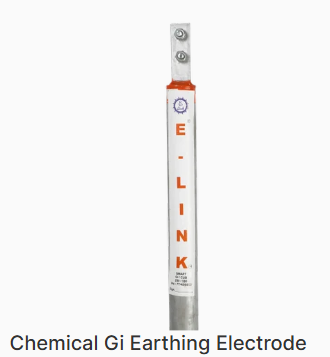
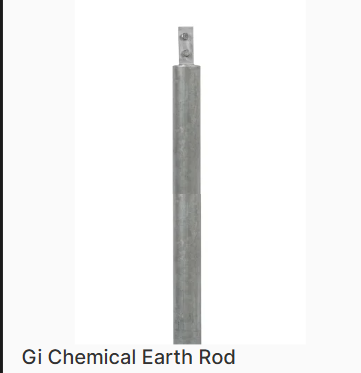
A lightning arrester without a proper earthing system is like a drain without a pipe – the current has nowhere to go. The quality and depth of the earthing system directly affect how effectively the lightning current is discharged. This is why lightning protection and chemical earthing are almost always specified together on serious projects.
Why Lightning Arrester Price Varies So Much Online
If you have searched for lightning arrester price in India, you have probably seen quotes ranging from a few hundred rupees to several lakhs. The reason for this extreme variation is not random – it comes down to three things.
People are comparing different products entirely. A small residential air terminal and an ESE system for an industrial plant are not the same product. Comparing their prices makes no sense.
Many cheaper products in the market do not comply with any recognised standard. They may look identical to a certified product from the outside but carry no test certification, no ΔT rating, and no guaranteed protection radius. In lightning protection, an uncertified product is not a bargain.
The total system cost versus the component cost is often confused. A supplier quoting just the air terminal price is not quoting you the cost of lightning protection – they are quoting one component of a complete system.
How to Choose the Right Lightning Arrester for Your Project
Here is a simple framework to guide your decision.
For residential buildings and small commercial establishments, a conventional Franklin system as per IEC 62305 is appropriate, cost-effective, and widely used.
For large industrial facilities, warehouses, solar plants, hospitals, and high-rise buildings, an ESE-type lightning arrester offers broader protection coverage from a single installation point, making it more practical and often more economical at scale.
For coastal areas, chemical plants, or any corrosive environment, specify SS304L construction to ensure the system lasts without degradation.
And regardless of which system you choose, always ensure the lightning protection system is paired with a properly designed earthing system. The two work together. One cannot perform without the other.
E-Link’s Lightning Protection Range
E-Link, based in Surat, Gujarat, supplies both conventional and ESE-type lightning protection systems across India, designed, tested, and certified to international standards.
The conventional lightning arrester range covers air terminals in single and multi-spike configurations, aluminium conductors, conductor holders, cross connectors, test links, expansion pieces, and HDGI masts – everything needed for a complete IEC 62305 compliant installation.
The ESE lightning arrester – compliant with NFC 17-102 – is available for projects requiring wide-radius protection, with full ΔT certification and SS 304L construction for long-term durability in any environment.
For current pricing, product selection guidance, or a site-specific protection assessment, contact E-Link’s engineering team directly. Lightning protection is not a product you want to guess on.