
elinkearthing

Author name: elinkmgmt

Uncategorized

Copper Earthing Plate Price in India: Sizes, Weights & What Affects the Cost 

A few months ago, a facility manager in Ahmedabad reached out to us with a simple question: “What is the copper earthing plate price for a 600×600 plate?” It seemed like a straightforward question. But the moment we started discussing his project, it became clear that the copper earthing plate price he had been quoted by three different suppliers varied by almost 40%, for what was supposedly the same product. One of the common reason for this confusion is that buyers dont understand what goes into pricing an earthing plate, and the numbers start making sense. What is a Copper Earthing Plate ? Copper Earthing Plate is a flat, solid copper sheet buried inside the ground around 3 meters or more and connected to building’s electrical system through a copper strip or a conductor. When a fault occurs anywhere in the system, current travels down through the conductor, into the plate, and disperses safely into the surrounding soil. It is one of the oldest and trusted earthing methods across India, especially where high conductivity and long-term reliability are non-negotiable. Copper Earthing Plate Sizes and weights Before dicussing price, let’s understand the standard specifiaction available in the market, E-Link manufactures copper earthing plates in the following standard sizes: Size Approx. Copper Plate Weight 300 x 300 x 3mm 2.41 kg 300 x 300 x 6mm 4.82 kg 600 x 600 x 3mm 9.64 kg 600 x 600 x 6mm 19.29 kg These same dimensions are also available in GI and HDGI variants, giving buyers flexibility depending on budget and application, but copper remains the preferred choice wherever conductivity and longevity matter most. What Affects Copper Earthing Plate Price? One of the single biggest factor that affects the price of copper as copper is traded daily in the commodity market, and its rate fluctuates based on global demand, supply, and currency movement. Since a copper earthing plate is priced largely by its weight in copper, the same 600x600x6mm plate can cost noticeably different amounts depending on the day you are buying it. This is exactly why no genuine manufacturer can give you a fixed, permanent copper earthing plate price – it must be checked against current copper rates at the time of order. 2. Size and thickness As the table above shows, a 600x600x6mm plate weighs almost 8 times more than a 300x300x3mm plate. Since copper is priced per kilogram, the price scales directly with size and thickness. Larger industrial installations requiring bigger plates will naturally cost more than a small residential setup. 3. Manufacturing and quality control Two copper plates of the same size can still differ in price based on manufacturing quality, purity of copper used, consistency of thickness across the plate, and the quality checks performed before dispatch. A plate that looks identical on the outside may corrode faster or underperform if the raw material or process is not up to standard. 4. Quantity ordered Bulk orders for industrial or commercial projects typically bring the per-unit copper earthing plate price down compared to single-piece residential purchases – simply due to economies of scale in manufacturing and logistics. Copper Plate vs GI Plate — Is Copper Always Necessary? This is one of the most common questions buyers have once they see the price difference between copper and GI plates. Copper earthing plates are the right choice when: GI or HDGI plates are a practical choice when: Why You Should Never Choose Based on Price Alone Here is something that catches many buyers off guard. Two copper earthing plates can be priced almost identically and still perform very differently underground. The reason comes down to what you cannot see- the purity of the copper, the consistency of thickness across the entire plate, and whether it has actually been tested before leaving the factory. A plate that is even slightly compromised in quality will corrode faster, lose conductivity over the years, and quietly weaken your entire earthing system, without giving any visible warning until something goes wrong. This is why, when comparing copper earthing plate prices across suppliers, it is worth asking direct questions: What is the source of the raw copper? Is the plate tested before dispatch? What quality parameters are checked? Getting an Accurate Copper Earthing Plate Price Because copper rates change daily, the most reliable way to get an accurate copper earthing plate price is to contact the manufacturer directly with your exact size, thickness, and quantity requirement. Any quote given without checking current copper rates should be treated with caution. E-Link manufactures and supplies copper, GI, and HDGI earthing plates from their facility in Surat, Gujarat, with quality checks at every stage of production — whether you need a single plate for a residential project or bulk supply for a large industrial installation
Uncategorized

Lightning Arrester Price in India — Types, Factors & What You Should Know Before Buying

A few years ago, a warehouse owner in Gujarat called us after a monsoon storm had caused a fire in his facility. A lightning arrester was never installed, and when lightning struck the building directly, it travelled through the electrical wiring and took out an entire section of the storage area. When we asked him why there was no protection in place, his answer was simple: “I thought it was too expensive.”  And this wouldn’t have happened if he had known that the lightning arrestor price costs a fraction of what he had lost that day. Lightning arrester price is one of the most searched topics during pre-monsoon months in India, and yet most buyers have very little clarity on what they are actually paying for, what type they need, and why prices vary so dramatically across suppliers. What Is a Lightning Arrester and Why Does a Building Need One? A lightning arrestor, known as a lightning rod, is the first line of defence in a lightning protection system. It is installed at the highest point and intercepts lightning before it hits a building. Once it intercepts successfully, it safely carries the current into the ground through earthing systems. What happens when these systems are not installed? The lightning finds its own path. And this path is usually through your structure, your electrical wiring, or, in a worst-case scenario, a human. As per the IEC 62305, a complete lightning protection system consists of 3 components working together: the air terminal on top, the down conductor running along the building, and the earthing system below. All three of them need to be correctly designed and installed for the system to work. Types of Lightning Arresters  Before looking at the prices, it is important to look at the type of lightning protection systems. And in India, there are 2 different types of lightning protection systems available.  1. Conventional Franklin Rod System (IEC 62305)  A network of air terminals, bonding conductors, and down conductors is installed across the building, creating a Faraday cage-like setup that intercepts lightning at multiple points. E-Link’s conventional lightning arrester system is built as per IEC 62305 and IEC/IS 62561 standards. The air terminals are made from copper-bonded low-carbon steel, available in single spike and multi spike options, and also available in SS304 for corrosive environments. An aluminium lightning protection system variant is available as well. For most residential buildings, small commercial establishments, and standard industrial structures, a conventional Franklin system is the appropriate and cost-effective choice. 2. ESE Type Lightning Arrester (NFC 17-102)  ESE stands for Early Streamer Emission. This is an advanced technology that works differently from conventional systems. Instead of waiting for lightning to strike and then intercepting it, an ESE terminal actively emits an upward leader that intercepts the lightning strike at a much earlier stage.  E-Link’s ESE product complies with NFC 17-102 norms, carries a ΔT test certification of 60 microseconds, delivers 100% efficiency in discharging lightning current, and is made entirely from SS 304L- making it suitable for all environments, including coastal, industrial, and high-humidity zones. It requires no battery and no external power supply.  What Factors Affect Lightning Arrester Price in India?  By far, you must have an idea about the type of lightning arrestor. Now let’s discuss what affects its pricing. Area of protection required For conventional systems, the number of air terminals, the length of down conductors, and the complexity of the conductor network all scale with the size of the structure. A single-storey home needs far fewer components than a four-storey commercial building. For ESE systems, the protection radius determines which model is needed. A larger radius of protection means a higher-specification terminal, which affects cost.  Material of construction Copper-bonded steel, stainless steel SS304L, and aluminium are the three main material options. SS304L is the most corrosion-resistant and suited for harsh environments, but commands a premium. Aluminium systems offer a lighter, cost-effective alternative for certain applications. Down conductor and accessories The air terminal is just one part of the system. Down conductors, conductor holders, cross connectors, test links, expansion pieces, and the earthing system below all contribute to the total cost of installation. A properly engineered system includes all of these, and cutting corners on any one component compromises the entire protection chain. Installation and earthing A lightning arrester without a proper earthing system is like a drain without a pipe – the current has nowhere to go. The quality and depth of the earthing system directly affect how effectively the lightning current is discharged. This is why lightning protection and chemical earthing are almost always specified together on serious projects. Why Lightning Arrester Price Varies So Much Online  If you have searched for lightning arrester price in India, you have probably seen quotes ranging from a few hundred rupees to several lakhs. The reason for this extreme variation is not random – it comes down to three things.  People are comparing different products entirely. A small residential air terminal and an ESE system for an industrial plant are not the same product. Comparing their prices makes no sense.  Many cheaper products in the market do not comply with any recognised standard. They may look identical to a certified product from the outside but carry no test certification, no ΔT rating, and no guaranteed protection radius. In lightning protection, an uncertified product is not a bargain. The total system cost versus the component cost is often confused. A supplier quoting just the air terminal price is not quoting you the cost of lightning protection – they are quoting one component of a complete system. How to Choose the Right Lightning Arrester for Your Project Here is a simple framework to guide your decision. For residential buildings and small commercial establishments, a conventional Franklin system as per IEC 62305 is appropriate, cost-effective, and widely used. For large industrial facilities, warehouses, solar plants, hospitals, and high-rise buildings, an ESE-type lightning arrester offers broader protection coverage from a single installation point,

Uncategorized

Chemical Earthing: Ensuring Safety and Stability in Electrical Systems

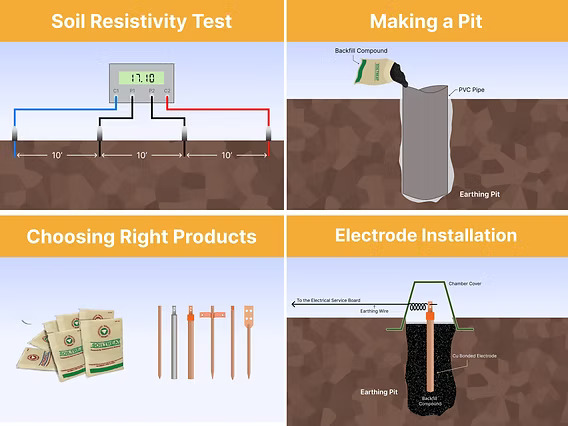
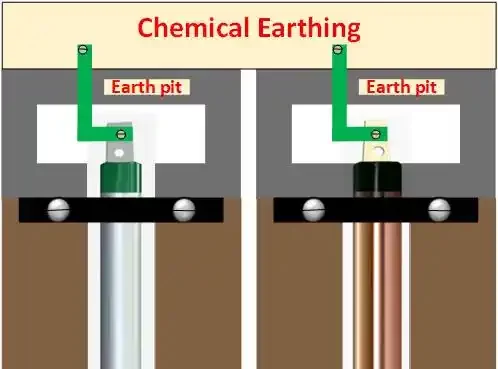
In today’s world, where electrical systems power almost every aspect of our lives, ensuring their safety and efficiency is paramount. Chemical earthing has emerged as a modern, reliable solution for grounding electrical systems, offering superior performance compared to traditional methods. Whether you’re a homeowner, an industrial facility manager, or an electrical engineer, understanding chemical earthing can help you make informed decisions for safer and more efficient electrical systems. What is Chemical Earthing? Chemical earthing is an advanced grounding technique that uses a mixture of conductive chemicals and materials to create a low-resistance path for electrical currents to dissipate into the earth. Unlike conventional earthing methods, chemical earthing ensures better conductivity, durability, and stability, even in challenging soil conditions. Chemical earthing systems must comply with international safety standards such as IS 3043 and IEEE 80 How Does Chemical Earthing Work? Chemical earthing involves the installation of an electrode (usually made of copper or galvanized iron) surrounded by a backfill compound. This compound is a mixture of conductive materials like graphite, bentonite, and other minerals that enhance soil conductivity and reduce earth resistance. The electrode is buried deep into the ground, ensuring a stable and long-lasting connection with the earth. Benefits of Chemical Earthing Chemical Earthing vs. Traditional Earthing: Key Differences Aspect Chemical Earthing Traditional Earthing Conductivity High, due to conductive compounds Moderate, depends on soil conditions Durability Long-lasting, corrosion-resistant Prone to corrosion and degradation Installation Requires specialized materials Simpler, but less effective Maintenance Low maintenance Requires frequent maintenance Cost Higher initial cost, but cost-effective long-term Lower initial cost, but higher maintenance expenses Applications of Chemical Earthing Chemical earthing is widely used in: Installation Process of Chemical Earthing Why Choose Elink Earthing for Chemical Earthing Solutions? At Elink Earthing, we specialize in providing high-quality chemical earthing solutions tailored to your needs. Our products are manufactured using premium materials and adhere to international safety standards. With years of experience and a team of skilled professionals, we ensure seamless installation and long-term performance. Key Features of Elink Earthing’s Chemical Earthing Systems What is the lifespan of a chemical earthing system? With proper installation and maintenance, a chemical earthing system can last up to 10-15 years. Can chemical earthing be installed in rocky soil? Yes, chemical earthing is highly effective in rocky and sandy soils due to its conductive backfill compound. Is chemical earthing expensive? While the initial cost may be higher than traditional earthing, its long-term benefits and low maintenance make it cost-effective. What is safety standards or regulations “For more details on earthing safety standards, refer to the National Electrical Code (NEC). Chemical earthing is a game-changer in the field of electrical safety, offering unmatched performance, durability, and reliability. By choosing Elink Earthing for your chemical earthing needs, you can ensure the safety and efficiency of your electrical systems for years to come. Contact us today to learn more about our products and services! To learn more about global earthing standards, visit the International Electrotechnical Commission (IEC) website

Uncategorized

What is the cost of chemical earthing in India?

The cost of chemical earthing in India varies depending on a number of factors, including: ⦁ The type of chemical earthing system used⦁ The size and complexity of the system⦁ The location of the installation⦁ The contractor’s fees Types of chemical earthing systems There are two main types of chemical earthing systems: ⦁ Pipe-in-pipe earthing system: This system consists of a copper pipe that is inserted into a galvanized iron (GI) pipe. The space between the two pipes is filled with a chemical backfill. Pipe-in-pipe earthing systems are typically more expensive than plate earthing systems, but they are also more effective and have a longer lifespan. ⦁ Plate earthing system: This system consists of a copper plate that is buried in the ground. The copper plate is surrounded by a chemical backfill. Plate earthing systems are typically less expensive than pipe-in-pipe earthing systems, but they are also less effective and have a shorter lifespan. Size and complexity of the system The size and complexity of the chemical earthing system will also affect the cost. Larger and more complex systems will typically be more expensive to install. Location of the installation The location of the installation will also affect the cost. Chemical earthing systems installed in remote or difficult-to-reach locations will typically be more expensive to install. Contractor’s fees Contractor’s fees will also vary depending on the contractor’s experience and reputation. It is important to get quotes from multiple contractors before choosing one. Average cost of chemical earthing in India The average cost of chemical earthing in India ranges from Rs. 1,500 to Rs. 10,000 per earthing electrode. The exact cost will depend on the factors mentioned above. Example cost of chemical earthing for a small residential building The cost of chemical earthing for a small residential building with a single earthing electrode will typically be around Rs. 5,000. This includes the cost of the earthing electrode, chemical backfill, and installation. Example cost of chemical earthing for a large commercial building The cost of chemical earthing for a large commercial building with multiple earthing electrodes will typically be in the range of Rs. 10,000 to Rs. 50,000. This includes the cost of the earthing electrodes, chemical backfill, and installation. Benefits of chemical earthing Chemical earthing offers a number of benefits over conventional earthing methods, including:⦁ Lower earth resistance: Chemical earthing can achieve a much lower earth resistance than conventional earthing methods, making it more effective at protecting people and property from electrical hazards.⦁ Longer lifespan: Chemical earthing systems have a longer lifespan than conventional earthing systems, typically lasting for 20-30 years.⦁ Lower maintenance: Chemical earthing systems require less maintenance than conventional earthing systems.⦁ More versatile: Chemical earthing can be used in a wider range of applications than conventional earthing methods. Conclusion Chemical earthing is an effective and reliable way to ground electrical equipment and protect people and property from electrical hazards. It is particularly useful in areas with high soil resistivity or where conventional earthing methods are not feasible.The cost of chemical earthing in India varies depending on a number of factors, but it is typically in the range of Rs. 1,500 to Rs. 10,000 per earthing electrode.If you are considering having a chemical earthing system installed, it is important to get quotes from multiple contractors and to choose a contractor who is experienced and reputable.

Scroll to Top