
new.elinkearthing

Uncategorized

Uncategorized

Chemical Earthing: Ensuring Safety and Stability in Electrical Systems

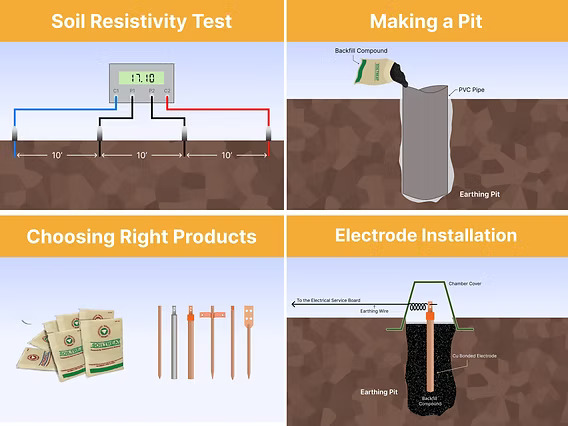
In today’s world, where electrical systems power almost every aspect of our lives, ensuring their safety and efficiency is paramount. Chemical earthing has emerged as a modern, reliable solution for grounding electrical systems, offering superior performance compared to traditional methods. Whether you’re a homeowner, an industrial facility manager, or an electrical engineer, understanding chemical earthing can help you make informed decisions for safer and more efficient electrical systems. What is Chemical Earthing? Chemical earthing is an advanced grounding technique that uses a mixture of conductive chemicals and materials to create a low-resistance path for electrical currents to dissipate into the earth. Unlike conventional earthing methods, chemical earthing ensures better conductivity, durability, and stability, even in challenging soil conditions. Chemical earthing systems must comply with international safety standards such as IS 3043 and IEEE 80 How Does Chemical Earthing Work? Chemical earthing involves the installation of an electrode (usually made of copper or galvanized iron) surrounded by a backfill compound. This compound is a mixture of conductive materials like graphite, bentonite, and other minerals that enhance soil conductivity and reduce earth resistance. The electrode is buried deep into the ground, ensuring a stable and long-lasting connection with the earth. Benefits of Chemical Earthing Chemical Earthing vs. Traditional Earthing: Key Differences Aspect Chemical Earthing Traditional Earthing Conductivity High, due to conductive compounds Moderate, depends on soil conditions Durability Long-lasting, corrosion-resistant Prone to corrosion and degradation Installation Requires specialized materials Simpler, but less effective Maintenance Low maintenance Requires frequent maintenance Cost Higher initial cost, but cost-effective long-term Lower initial cost, but higher maintenance expenses Applications of Chemical Earthing Chemical earthing is widely used in: Installation Process of Chemical Earthing Why Choose Elink Earthing for Chemical Earthing Solutions? At Elink Earthing, we specialize in providing high-quality chemical earthing solutions tailored to your needs. Our products are manufactured using premium materials and adhere to international safety standards. With years of experience and a team of skilled professionals, we ensure seamless installation and long-term performance. Key Features of Elink Earthing’s Chemical Earthing Systems What is the lifespan of a chemical earthing system? With proper installation and maintenance, a chemical earthing system can last up to 10-15 years. Can chemical earthing be installed in rocky soil? Yes, chemical earthing is highly effective in rocky and sandy soils due to its conductive backfill compound. Is chemical earthing expensive? While the initial cost may be higher than traditional earthing, its long-term benefits and low maintenance make it cost-effective. What is safety standards or regulations “For more details on earthing safety standards, refer to the National Electrical Code (NEC). Chemical earthing is a game-changer in the field of electrical safety, offering unmatched performance, durability, and reliability. By choosing Elink Earthing for your chemical earthing needs, you can ensure the safety and efficiency of your electrical systems for years to come. Contact us today to learn more about our products and services! To learn more about global earthing standards, visit the International Electrotechnical Commission (IEC) website
Uncategorized

What is the cost of chemical earthing in India?

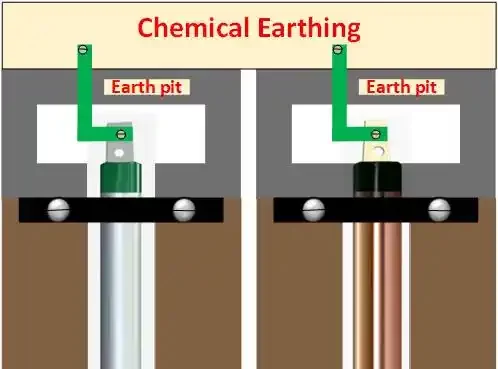
The cost of chemical earthing in India varies depending on a number of factors, including: ⦁ The type of chemical earthing system used⦁ The size and complexity of the system⦁ The location of the installation⦁ The contractor’s fees Types of chemical earthing systems There are two main types of chemical earthing systems: ⦁ Pipe-in-pipe earthing system: This system consists of a copper pipe that is inserted into a galvanized iron (GI) pipe. The space between the two pipes is filled with a chemical backfill. Pipe-in-pipe earthing systems are typically more expensive than plate earthing systems, but they are also more effective and have a longer lifespan. ⦁ Plate earthing system: This system consists of a copper plate that is buried in the ground. The copper plate is surrounded by a chemical backfill. Plate earthing systems are typically less expensive than pipe-in-pipe earthing systems, but they are also less effective and have a shorter lifespan. Size and complexity of the system The size and complexity of the chemical earthing system will also affect the cost. Larger and more complex systems will typically be more expensive to install. Location of the installation The location of the installation will also affect the cost. Chemical earthing systems installed in remote or difficult-to-reach locations will typically be more expensive to install. Contractor’s fees Contractor’s fees will also vary depending on the contractor’s experience and reputation. It is important to get quotes from multiple contractors before choosing one. Average cost of chemical earthing in India The average cost of chemical earthing in India ranges from Rs. 1,500 to Rs. 10,000 per earthing electrode. The exact cost will depend on the factors mentioned above. Example cost of chemical earthing for a small residential building The cost of chemical earthing for a small residential building with a single earthing electrode will typically be around Rs. 5,000. This includes the cost of the earthing electrode, chemical backfill, and installation. Example cost of chemical earthing for a large commercial building The cost of chemical earthing for a large commercial building with multiple earthing electrodes will typically be in the range of Rs. 10,000 to Rs. 50,000. This includes the cost of the earthing electrodes, chemical backfill, and installation. Benefits of chemical earthing Chemical earthing offers a number of benefits over conventional earthing methods, including:⦁ Lower earth resistance: Chemical earthing can achieve a much lower earth resistance than conventional earthing methods, making it more effective at protecting people and property from electrical hazards.⦁ Longer lifespan: Chemical earthing systems have a longer lifespan than conventional earthing systems, typically lasting for 20-30 years.⦁ Lower maintenance: Chemical earthing systems require less maintenance than conventional earthing systems.⦁ More versatile: Chemical earthing can be used in a wider range of applications than conventional earthing methods. Conclusion Chemical earthing is an effective and reliable way to ground electrical equipment and protect people and property from electrical hazards. It is particularly useful in areas with high soil resistivity or where conventional earthing methods are not feasible.The cost of chemical earthing in India varies depending on a number of factors, but it is typically in the range of Rs. 1,500 to Rs. 10,000 per earthing electrode.If you are considering having a chemical earthing system installed, it is important to get quotes from multiple contractors and to choose a contractor who is experienced and reputable.

Scroll to Top